Table of Contents
I spent four months fasting ‘correctly’ and feeling progressively worse.
I was doing 16:8. I was eating whole foods. I was exercising. On paper, everything was right. The idea was to look my best on my upcoming holiday (it was back in June 2024)…. But I was waking at 3 am with a racing heart, struggling to get through the afternoon without brain fog, and worst of all I put on weight as opposed to maintain my weight or ideally lose 1-2kg! My GP ran bloods. Everything came back normal.
What was actually happening was this: my fasting protocol was spiking my cortisol. And once I understood that, everything changed!!!
Fasting is a physical stressor. When your body perceives it as a threat — which it’s more likely to do at certain points in your hormonal cycle — cortisol rises to mobilise energy. In the short term, that’s a normal and even beneficial response. The problem is when cortisol stays elevated. That’s when you start to feel the fallout: anxiety, disrupted sleep, hair loss, weight retention, and that distinctive feeling of being simultaneously exhausted and unable to rest.
In this post, I’ll explain what’s happening hormonally when cortisol spikes during fasting, how to recognise the signs in your own body, and four practical protocols I use to keep cortisol low while still getting the benefits of fasting. I’ll also be clear about where the science is solid and where it’s still emerging — because this space is full of overclaims and you deserve accurate information.
Signs Your Cortisol Is Too High During Fasting
Before getting into the biology, it’s worth knowing what elevated cortisol actually feels like. Many of these symptoms are easy to dismiss or attribute to other causes. I dismissed mine for months.
Physical symptoms
- Heart palpitations or a racing heart, particularly during your fasting window or shortly after waking
- Trembling, shakiness, or a jittery sensation — this is cortisol mobilising glucose and preparing your body for action
- Difficulty falling asleep or waking in the early hours and being unable to get back to sleep
- Increased hair shedding — sustained high cortisol can trigger telogen effluvium, a form of stress-related hair loss
- Skin breakouts or rosacea flare-ups caused by cortisol-driven inflammation and increased sebum production
Cognitive and emotional symptoms
- Anxiety that seems to appear from nowhere, with racing thoughts or a low-level sense of dread
- Irritability and a shortened fuse, particularly in the late morning during your fasting window
- Brain fog, poor concentration, or difficulty making decisions
- Mood that swings significantly across the day
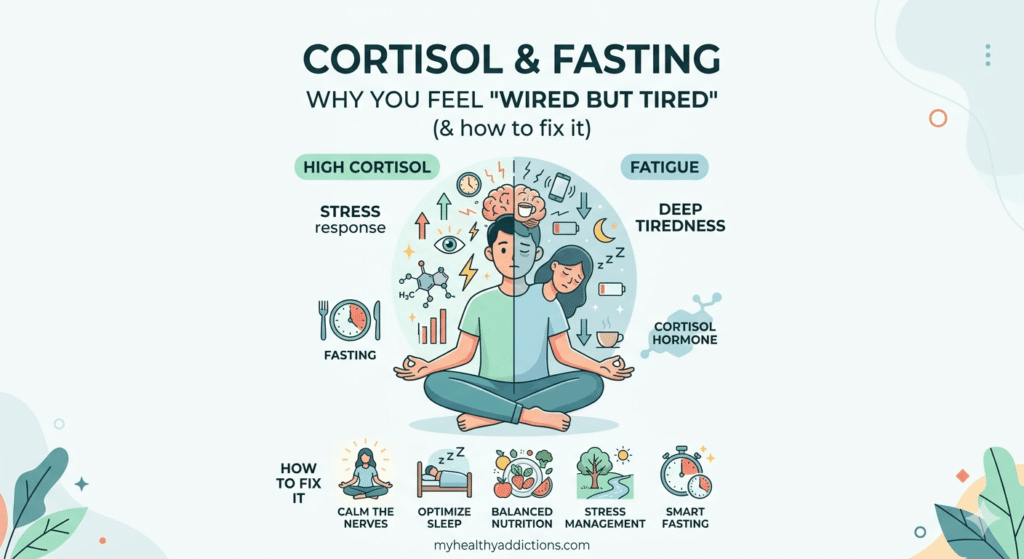
The most telling sign, and the one I recognise most in myself, is the ‘wired but tired’ feeling: your body is signalling exhaustion but your nervous system won’t stand down (except I thought it was because of more stress at work). You can’t rest because physiologically, your body believes there’s a threat to manage.
If any of these feel familiar, your fasting protocol is worth examining before anything else.
How Fasting Raises Cortisol — and Why Women Are More Vulnerable
Cortisol is your primary stress hormone, produced by your adrenal glands in response to physical or psychological stressors. It follows a natural daily rhythm: highest in the early morning to support waking and alertness, declining through the day, and lowest at night to allow sleep. This is known as the diurnal cortisol curve, and disrupting it has wide-ranging effects on metabolism, mood, and immune function.
Fasting raises cortisol because the body interprets an absence of food as a potential survival threat. Research published in Psychoneuroendocrinology and other peer-reviewed journals has documented cortisol elevation in response to caloric restriction and extended fasting windows. In healthy individuals with good hormonal resilience, cortisol rises modestly and returns to baseline without issue.
For women, the picture is more complex. Cortisol and the female sex hormones — primarily oestrogen and progesterone — interact in ways that affect how the body responds to fasting stress. Research suggests that oestrogen has a moderating effect on the HPA (hypothalamic-pituitary-adrenal) axis, the system that governs cortisol release. During the follicular phase, when oestrogen is relatively high, many women find fasting more manageable. During the luteal phase (roughly days 15–28), progesterone rises and the body’s energy demands increase. Fasting during this window can amplify the cortisol response.
It’s important to be accurate here: the research on cycle-synced fasting is still in its early stages, and much of the evidence base is extrapolated from studies on stress hormones and reproductive health rather than from direct trials on intermittent fasting across the menstrual cycle. The mechanistic logic is sound, but we don’t yet have large-scale randomised controlled trials. What I can say is that my own experience — and the experience of many women I’ve heard from — is consistent with this framework.
For a thorough overview of how the HPA axis and cortisol interact with female reproductive hormones, the Endocrine Society’s patient resources are a reliable starting point.
Why the Luteal Phase Is a Cortisol Risk Period
I refer to the luteal phase (days 15–28 of a typical cycle) as the ‘Nurture Phase’ — not because it’s a clinical term, but because it captures what your body is actually asking for during this window: nourishment, rest, and lower physiological demand.
During the luteal phase, progesterone rises significantly. Progesterone increases basal metabolic rate slightly and tends to increase appetite and cravings for energy-dense foods. The body is preparing, hormonally and metabolically, for a potential pregnancy. Fasting during this phase creates a mismatch: your physiology is signalling a need for increased caloric intake while you’re restricting it. The resulting stress response drives cortisol up.
When cortisol stays elevated during this phase, the downstream effects can compound quickly:
- Elevated cortisol disrupts melatonin production, worsening sleep quality
- Poor sleep elevates cortisol further the following day
- Sustained high cortisol triggers cortisol-induced insulin resistance, making fat loss harder
- The inflammatory load increases, affecting skin, mood, and immune function
- Hair follicles enter the telogen (resting/shedding) phase earlier than normal
The simplest intervention for many women is to stop fasting during the luteal phase entirely. Instead, eat balanced, nutrient-dense meals — slightly higher in complex carbohydrates — and allow your body what it’s asking for. For more on how the menstrual cycle affects metabolism and appetite, this review in Frontiers in Endocrinology provides accessible, evidence-based context.
How to Lower Cortisol While Fasting: 4 Protocols That Work
These are the four protocols I use and recommend. They range from immediate interventions to longer-term structural changes. None of them require supplements you can’t source easily or drastic changes to your lifestyle.
Protocol 1: The Fat Bomb Break
If you feel cortisol spiking mid-fast — anxious, shaky, heart racing — break your fast immediately with a small, high-fat, low-carbohydrate snack. Don’t push through.
Fat is the most satiating macronutrient, and eating it sends a clear ‘food is available’ signal to your nervous system. This can help shift your body from sympathetic (fight-or-flight) activation toward parasympathetic (rest-and-digest) mode. Good options include:
- Half an avocado with a pinch of sea salt
- One to two tablespoons of almond or peanut butter
- A small handful of macadamia nuts or pecans
- One to two tablespoons of MCT oil in water or coffee
- A small portion of full-fat cheese
Within 15–20 minutes you should notice your heart rate settling and anxiety easing. Keep one of these options available during your fasting window so you’re not having to make decisions while symptomatic.
Completing a fast is not more important than your nervous system’s wellbeing. Breaking your fast when your body signals distress is the correct response, not a failure.
Protocol 2: The 13-Hour Safe Zone
If fasting consistently feels stressful, reduce your window to 13 hours for a full cycle and rebuild from there. A 13-hour fast — for example, finishing dinner at 7pm and eating again at 8am — aligns with your natural circadian rhythm and is well within the range associated with metabolic benefit without significant HPA axis stress.
Research published in Cell Metabolism has demonstrated that time-restricted eating in alignment with the circadian cycle produces meaningful improvements in metabolic markers. A 13-hour window captures these benefits without the cortisol burden of longer fasts.
Stay at 13 hours until your sleep, energy, and mood are stable across a full cycle. Only then experiment with extending to 15 or 17 hours — and only during the follicular phase (days 1–14), when your hormonal environment is more resilient to the stress of fasting.
This approach is particularly relevant if you have a history of anxiety, burnout, or HPA axis dysregulation.
Protocol 3: Magnesium and Electrolyte Support
Sustained high cortisol depletes magnesium — a mineral that plays a critical role in regulating the stress response and supporting nervous system function. This is well-documented in the research literature: a 2020 review in Nutrients confirmed the bidirectional relationship between magnesium status and cortisol, noting that magnesium deficiency amplifies the HPA axis response to stress.
I use two forms of magnesium support:
- Magnesium glycinate (200–400mg before bed): the glycinate form is highly bioavailable and gentle on the digestive system. It supports sleep quality and helps regulate cortisol overnight.
- Topical magnesium spray: applied to the skin once or twice daily for those who find oral magnesium difficult to tolerate.
During your fasting window, adding a pinch of Celtic sea salt or Himalayan salt to your water supports adrenal function and prevents electrolyte depletion, which can itself trigger a mild cortisol response. This is a simple, low-cost intervention that many women notice a difference from within a few days.
If you’re considering magnesium supplementation and have any underlying health conditions or take medication, check with your GP or pharmacist first.
Protocol 4: The Calm Anchor (Breathing Before Breaking Your Fast)
This is the protocol I was most sceptical about and the one I now use consistently. Before breaking your fast, spend 90 seconds doing a structured breathing exercise designed to activate the vagus nerve and shift your nervous system into parasympathetic mode.
The technique:
- Inhale slowly through your nose for 4 counts
- Hold for 4 counts
- Exhale slowly through your mouth for 6 counts
- Repeat 3 times
The extended exhale is the mechanism: when your exhale is longer than your inhale, you activate the vagus nerve, which signals safety to your nervous system and initiates the parasympathetic response. This is supported by research on heart rate variability and vagal tone — this overview from the Cleveland Clinic explains the underlying physiology clearly.
Beyond the cortisol effect, breaking your fast in a calm state improves digestive readiness. Cortisol suppresses digestive function — eating while still activated means your body is less equipped to absorb and process nutrients effectively.
Does Coffee Spike Cortisol During Fasting?
Yes, and this is worth addressing directly because it’s one of the most common questions I receive.
Caffeine stimulates cortisol release via the same HPA axis pathway that fasting activates. Drinking coffee — especially on an empty stomach during a fasting window — can amplify an already elevated cortisol response. Research published in Psychosomatic Medicine found that caffeine increased cortisol response to stress, with the effect more pronounced in individuals who were already under physiological load.
If you’re experiencing cortisol symptoms during fasting, the combination of an extended fast and multiple coffees is likely making things worse. Options worth trying:
- Delay your first coffee until after you’ve broken your fast
- Switch to matcha during your fasting window — L-theanine moderates the cortisol response to caffeine
- Reduce total daily coffee intake to one or two cups during a period of cortisol recovery
How to Reintroduce Longer Fasts Safely
Once your baseline is stable — sleep consistent, mood even, no heart palpitations, energy manageable — you can cautiously extend your fasting window during the follicular phase only.
The approach I use:
- Extend by one hour at a time, not by jumping from 13 to 16 hours
- Monitor for 72 hours after any extension before deciding to go further
- Return to 13 hours during the luteal phase regardless of how well the longer fast went
- Track sleep quality as your primary indicator — disrupted sleep is often the first sign that your body is under too much fasting-related stress
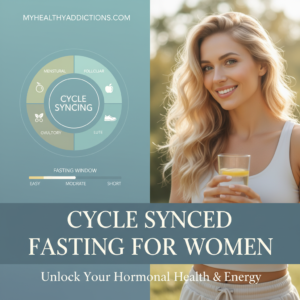
If you use the Cycle-Synced Fasting Dashboard, it will show your current phase and the recommended fasting window based on where you are in your cycle. You can access it here.
When to See a Doctor
Persistent heart palpitations, significant hair loss, severe anxiety, or any symptoms that feel beyond what you’d expect from a fasting protocol warrant a conversation with your GP. Ask specifically about cortisol testing (a morning serum cortisol or 24-hour urinary cortisol test) and thyroid function, as hypothyroidism can present with overlapping symptoms.
It’s worth knowing that not all GPs are familiar with the nuances of cycle-synced eating or the HPA axis implications of intermittent fasting. If you feel your concerns are being dismissed, a functional medicine practitioner or a doctor with a specific interest in women’s hormonal health may offer a more useful conversation. The British Society for Lifestyle Medicine maintains a directory of practitioners in the UK.
The Bottom Line
If you’re fasting correctly but feeling terrible — anxious, wired, exhausted, losing hair — your cortisol is most likely the issue. This isn’t a sign that fasting doesn’t work for you. It’s a sign that your current protocol doesn’t match your hormonal environment.
The four protocols — the Fat Bomb Break, the 13-Hour Safe Zone, magnesium and electrolyte support, and the Calm Anchor — are practical, low-cost, and based on sound physiological principles. Start with whatever feels most accessible. You don’t need to implement all four at once.
If you want a simple way to match your fasting length to your cycle phase, the Cycle-Synced Fasting Dashboard does that for you. Input your cycle day and it will show you where you are and what fasting window is likely to feel most manageable.
And if you’ve recognised your own experience in this post, I’d love to hear about it in the comments below.
Frequently Asked Questions
Does intermittent fasting increase cortisol?
Yes, fasting raises cortisol as part of a normal physiological response to reduced food availability. In most people, this is a modest and temporary rise. The problem arises when fasting is too long, poorly timed in relation to the menstrual cycle, or combined with other stressors (poor sleep, high caffeine, intense exercise), causing cortisol to remain elevated rather than returning to baseline.
What are the signs of high cortisol from fasting?
The most common signs are heart palpitations, a jittery or shaky feeling, waking in the early hours, anxiety that appears without clear cause, brain fog, increased hair shedding, and a persistent ‘wired but tired’ feeling — exhausted but unable to rest or switch off.
How do I lower cortisol while fasting?
The four most effective approaches are: breaking your fast with a high-fat snack when you feel symptoms rising, reducing your fasting window to 13 hours until your baseline stabilises, supporting your adrenals with magnesium glycinate and electrolytes, and doing a short breathing exercise (extended exhale) before eating to activate the parasympathetic nervous system.
Should I fast during my luteal phase?
Based on current understanding of how progesterone affects the cortisol response, many women do better avoiding fasting (or significantly reducing their fasting window) during the luteal phase (approximately days 15–28). This is not yet confirmed by large clinical trials specifically on fasting, but the mechanistic rationale is sound and consistent with the experience of many women. If fasting during this phase consistently makes you feel worse, that’s a useful signal in itself.
Does coffee spike cortisol during fasting?
Yes. Caffeine stimulates cortisol release, and drinking coffee on an empty stomach during a fasting window can compound an already elevated cortisol response. If you’re experiencing cortisol symptoms, delaying your first coffee until after breaking your fast, or switching to matcha (which contains cortisol-moderating L-theanine), is worth trying.